August 7, 2024
Comprehensive Guide on Fasteners: Self-Clinching, Broaching, Surface Mount, and Weld-On Fasteners
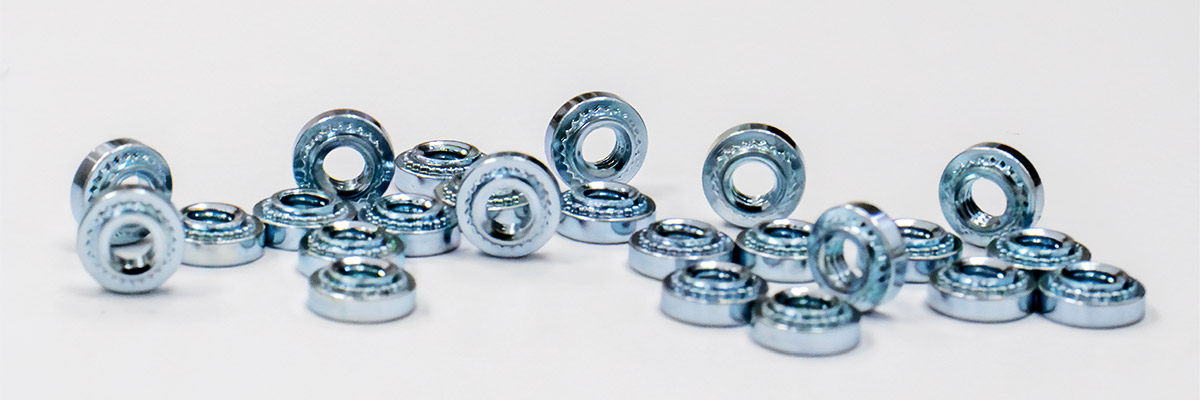
Fasteners are integral components in mechanical and structural design, providing secure and reliable joining solutions for a variety of materials. Engineers must select the appropriate type of fastener based on application requirements and material compatibility. This guide provides a detailed comparison of self‑clinching, broaching, surface mount, and weld‑on fasteners, highlighting their specific use cases, installation methods, and the materials they are best suited for.
Self‑Clinching Fasteners
Description: Self‑clinching fasteners are engineered to be pressed into a host material, creating a permanent, strong threaded or unthreaded attachment point. The installation process involves the displacement of the material into undercuts in the fastener, forming a secure lock.
Types and Applications
- Self‑Clinching Studs (SA, SB, SC, SD, SE, SF, SG)
Materials: Aluminum, carbon steel, stainless steel (300 and 400 series), heat‑treated materials.
Applications: Providing strong, male-thread installations in sheet metals. Common in electronics, automotive, and aerospace industries where high‑strength, vibration‑resistant connections are required. - Self‑Clinching Nuts (NA, NAL, NB, NC, NEL, NF, NG, NH, NHL, NJ, NM, NN, NP)
Materials: Aluminum, carbon steel, stainless steel (300 and 400 series).
Applications: Used in thin sheets to provide durable threaded attachment points. Floating thread options allow for tolerance compensation in assemblies, while blind threads offer sealed ends to prevent leakage. - Self‑Clinching Standoffs (TA, TB, TC, TCU, TD, TDU, TE, TF, TG, TGU, TH, TJ, TJU, TK, TM, TN, TP, TR, TS, TT)
Materials: Brass, aluminum, heat‑treated carbon steel, stainless steel (300 and 400 series).
Applications: Provide mounting points for components within enclosures and are essential in PCB mounting, offering both threaded and unthreaded options. Special features like concealed heads and grounding options cater to specific design requirements.
Installation Method
- Hole Preparation: A hole is punched or drilled into the sheet material. The hole size must be precise to ensure proper clinching.
- Fastener Insertion: The fastener is placed into the hole, aligning the undercuts with the material.
- Pressing: Using a press or other suitable tool, the fastener is pressed into the sheet material. The pressing force displaces the material, flowing it into the undercuts of the fastener, creating a strong mechanical lock.
When to Use
- Ideal for applications requiring high strength and permanent installation in ductile materials.
- Commonly employed in sheet metal fabrication, electronic enclosures, and other assemblies where space constraints and reliability are critical.
Suitable Materials
- Aluminum, carbon steel, stainless steel (300 and 400 series), phosphor bronze, heat‑treated materials.
Broaching Fasteners
Description: Broaching fasteners are designed to be installed into non‑ductile materials such as PC boards and hard plastics. They create their own holes during installation through a broaching action, which involves cutting into the material to ensure a secure fit.
Types and Applications
- Typically used in electronic components and circuit boards where traditional fasteners are impractical.
- Ideal for securing components in brittle or hard materials without causing damage or requiring additional preparation.
Installation Method
- Alignment: Position the fastener on the surface of the material where it is needed.
- Pressing: Press the fastener into the material, with sharp edges cutting and displacing the material to create a secure fit.
- Seating: Seat the fastener flush with the surface, ensuring a stable and reliable attachment point.
When to Use
- Ideal for non‑ductile materials where self‑clinching fasteners cannot be used.
- Commonly found in electronics, PCBs, and assemblies involving hard plastics.
Suitable Materials
- PC boards, hard plastics.
Surface Mount Fasteners
Description: Surface mount fasteners are designed to be installed on the surface of materials using adhesive or soldering techniques. These fasteners are predominantly used in electronic assemblies where traditional fastening methods are not viable due to space constraints.
Types and Applications
- Surface Mount Standoffs: Provide mounting points on PC boards and other flat surfaces. They are crucial in maintaining the integrity of electronic assemblies by ensuring proper spacing and support.
Installation Method
- Adhesive Application: Apply adhesive to the fastener base or material surface.
- Placement: Place the fastener onto the adhesive-coated area.
- Curing: Allow adhesive to cure for a secure bond; alternatively, solder for metal surfaces.
When to Use
- Ideal for electronic assemblies where space is limited and through-hole mounting is impractical.
- Used extensively in PCB manufacturing and other electronic component assemblies.
Suitable Materials
- PC boards, flat electronic substrates.
Weld‑On Fasteners
Description: Weld-on fasteners are designed to be permanently welded onto the host material, providing robust and secure attachment points capable of withstanding significant loads and stresses.
Types and Applications
- Used in applications requiring exceptionally strong, permanent joints.
- Common in industries like automotive, heavy machinery, and structural engineering.
Installation Method
- Preparation: Clean and prep surfaces for welding.
- Positioning: Position the fastener on the material surface.
- Welding: Use MIG, TIG, or spot welding to bond fastener and material fully.
When to Use
- Ideal for high-strength, permanent joints where the host material tolerates welding.
- Often used in automotive chassis, structural frameworks, and industrial machinery.
Suitable Materials
- Carbon steel, stainless steel, and other weldable metals.
Summary
Each type of fastener serves a specific purpose and is designed for particular applications and materials. Here’s a detailed overview:
- Self‑Clinching Fasteners: Best for high-strength, permanent installations in ductile sheet metals. Suitable for electronics, aerospace, and automotive industries.
- Broaching Fasteners: Ideal for non‑ductile materials like PC boards and hard plastics. Essential for electronic and PCB assemblies.
- Surface Mount Fasteners: Perfect for space-constrained electronic assemblies requiring secure mounting without through-hole.
- Weld‑On Fasteners: Suited for heavy-duty, load-bearing applications in weldable metals.
Selecting the appropriate fastener type based on application requirements and material compatibility is crucial for ensuring the integrity and performance of the final assembly.